
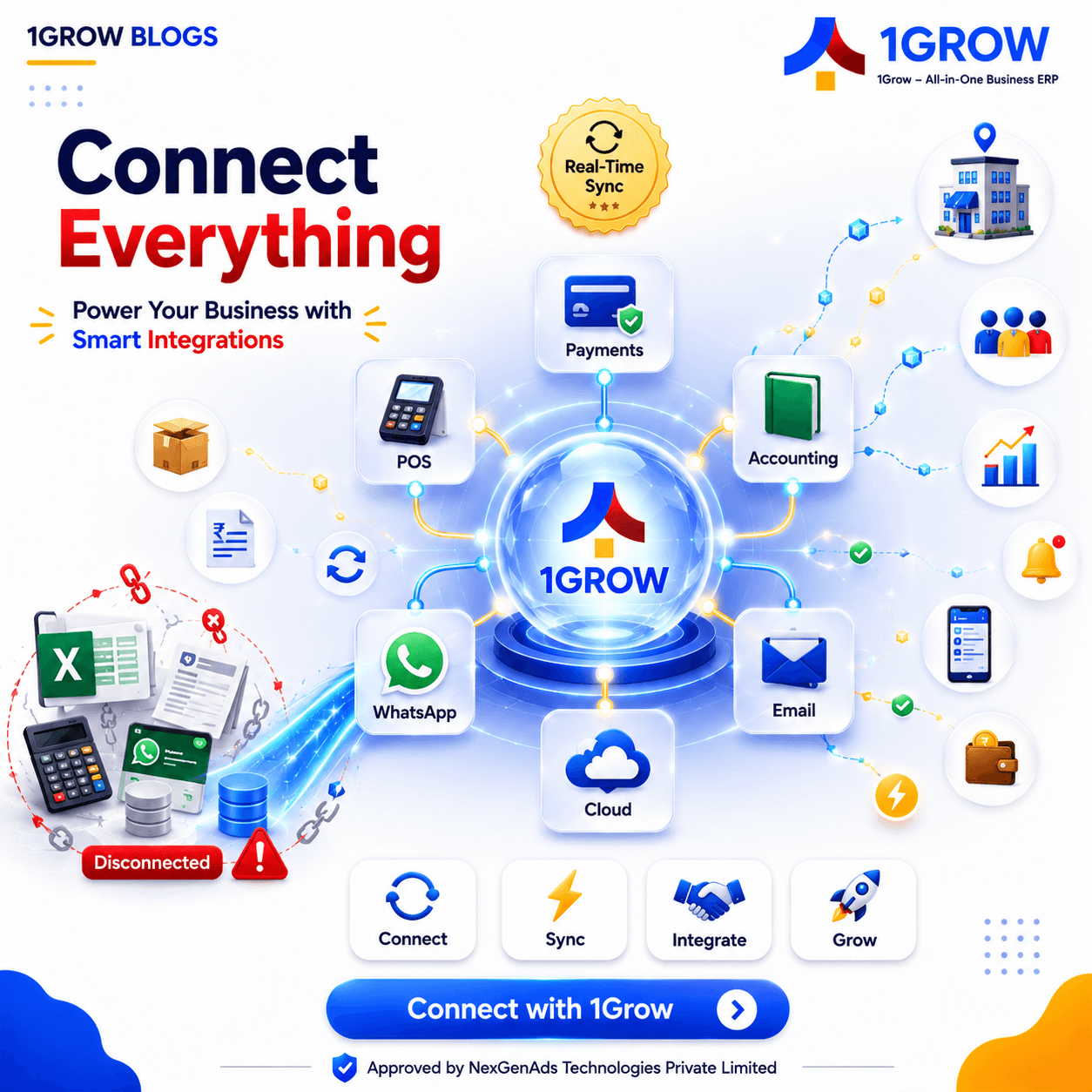
Integrations That Matter: POS, Payments, and Accounting for Local Stores
Which integrations deliver the highest ROI for local retail and rental businesses, and how to prioritize your integration work.
CoFounder, NexGenAds Technologies Pvt Ltd
TL;DR
Which integrations deliver the highest ROI for local retail and rental businesses, and how to prioritize your integration work.
Why Integrations Matter
For local retail and rental businesses, the right integrations eliminate double entry, reduce errors, and provide real-time visibility. But not all integrations are equal. Here is which ones deliver the most value.
The Three High-ROI Integrations
1. POS Integration
#### What It Does Connects your point-of-sale system to your inventory and accounting. Every sale automatically updates stock levels and financial records.
Why It Matters
- Zero manual entry: Sales data flows automatically to inventory
- Real-time stock levels: Know exactly what is available at each location
- Faster checkout: Staff don't need to switch between systems
ROI Estimate
- Saves 2-3 hours/day on manual inventory updates
- Reduces stock discrepancies by 90%
- Faster checkout improves customer experience
2. Payment Gateway Integration
#### What It Does Accepts online payments through UPI, cards, net banking, and wallets. Payments are automatically matched to invoices.
Why It Matters
- Faster collections: Customers can pay immediately via WhatsApp link
- Automatic reconciliation: No manual matching of payments to invoices
- Reduced late payments: Auto-reminders with payment links
ROI Estimate
- Reduces average collection time from 15 days to 3 days
- Eliminates 5+ hours/week of manual reconciliation
- Decreases bad debt by 40%
3. Accounting Integration
#### What It Does Syncs financial data with your accounting software (Tally, Zoho Books, etc.). Invoices, payments, and expenses flow automatically.
Why It Matters
- Real-time financial visibility: See profit and loss as it happens
- Tax compliance: GST data is always current
- Audit readiness: Complete transaction history is available
ROI Estimate
- Saves 2 days/month on accounting data entry
- Reduces tax filing errors by 95%
- Provides instant financial visibility for decision-making
Integration Priority Matrix
| Priority | Integration | Effort | Impact |
|---|---|---|---|
| 1 | Payment Gateway | Low | High |
| 2 | POS System | Medium | High |
| 3 | Accounting Software | Medium | Medium |
| 4 | WhatsApp Business | Low | Medium |
| 5 | Email Marketing | Low | Low |
How to Prioritize
### Start with Payments If you do only one integration, make it payment gateway. The ROI is immediate: faster collections, less manual work, and better cash flow.
### Then Add POS Once payments are automated, connect your POS. This eliminates inventory discrepancies and speeds up checkout.
### Finally, Connect Accounting With payments and POS working, accounting integration becomes straightforward. All the data is already in the system.
Implementation Tips
- 1Test with a pilot: Start with one branch or one product category
- 2Map your data fields: Ensure POS product codes match 1Grow inventory codes
- 3Train staff on the workflow: Show them how the integration changes their daily tasks
- 4Monitor for errors: Check reconciliation reports daily for the first week
- 5Document everything: Keep notes on configuration for future reference
Common Pitfalls
- Trying to do everything at once: Focus on one integration at a time
- Ignoring data quality: Clean your data before integrating
- Skipping the test phase: Always run a parallel period with both systems
- Not involving staff: Get buy-in from the team who will use the system daily
Tags
Related Articles
How Multi-Business Owners Save 10+ Hours Weekly with a Single ERP System
Running multiple businesses means juggling spreadsheets, WhatsApp messages, and manual registers. A unified SaaS ERP eliminates duplication and saves owners 10+ hours every week.
Pricing Explained: How to Choose the Right Plan for Multi-Branch Businesses
Understanding SaaS pricing variables like users, locations, and features. A decision matrix to help you pick the right plan for 1-3 branches vs 10+ branches.
7 Mistakes Multi-Business Owners Make When Scaling Operations (and How to Avoid Them)
From no single source of truth to manual reconciliations, these seven common mistakes can derail your growth. Here is how to fix each one.